Share this
by Meghann Butcher on July 18, 2024
For any brand navigating commerce today, two business models define nearly every product sale, wholesale and retail.
Whether you are an emerging apparel brand weighing your first wholesale account, or an established manufacturer evaluating a direct to consumer (DTC) push, understanding the structural differences between these models is fundamental to building a profitable channel strategy.
Global B2B ecommerce now exceeds $20 trillion annually, a figure that underscores just how much business happens before a product ever reaches a consumer's hands. This guide breaks down wholesale vs retail in plain terms, compares pricing and margin structures, explains how modern digital ordering works, and shows how brands are successfully running both channels at once.
What Is Wholesale? A Clear Definition
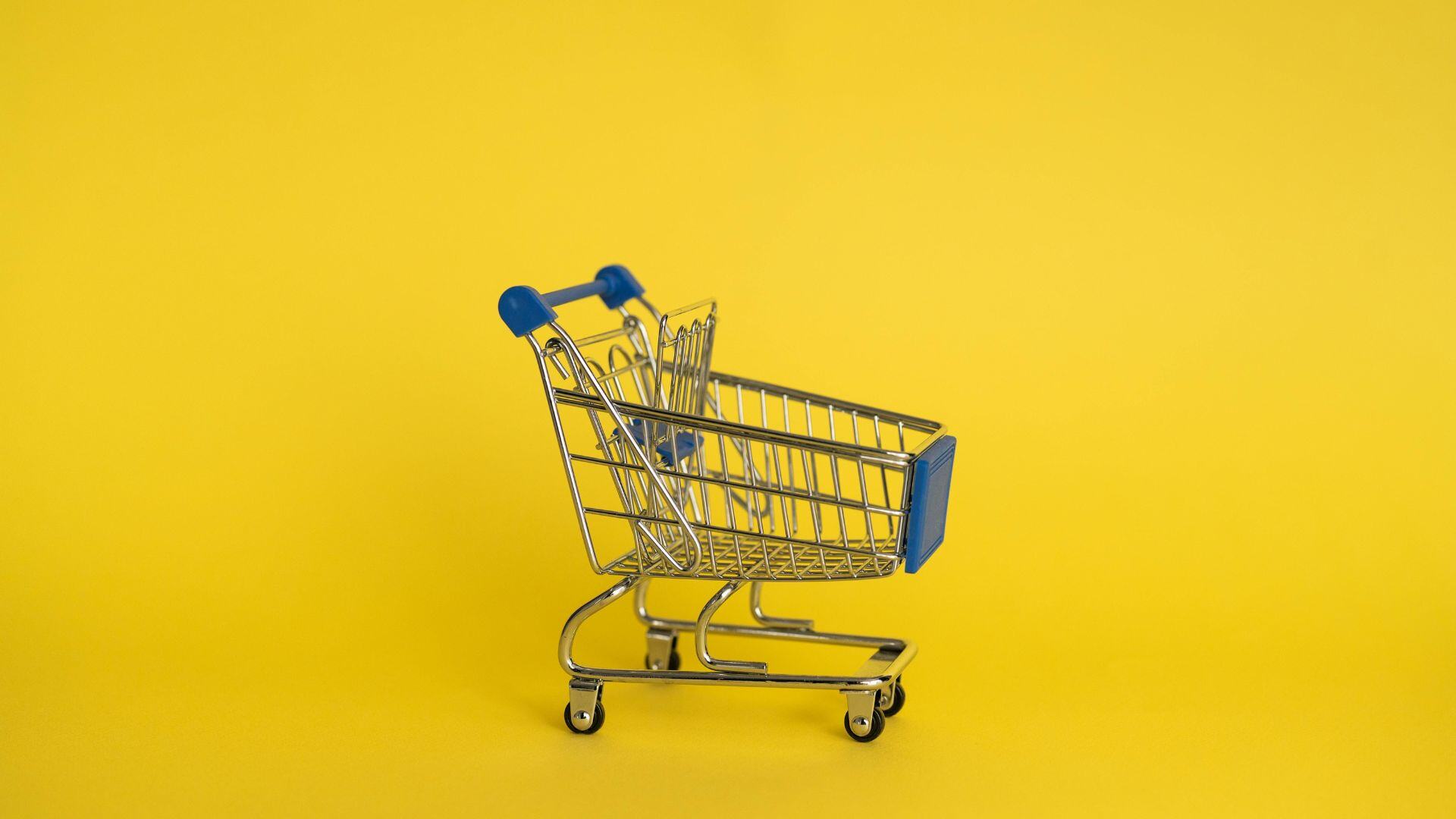
Wholesale is a business model in which a brand or supplier sells products in bulk to other businesses, typically retailers, distributors, or buying groups, at a price lower than the eventual consumer-facing retail price. The buying business then resells those products to end consumers at a markup.
In a classic wholesale definition, the wholesale business model operates as a B2B (business-to-business) transaction. The brand is not selling to the person who will ultimately wear, use, or consume the product. Instead, it is selling to a retail partner who will take on the responsibility of merchandising, marketing, and selling to end consumers.
Key characteristics of the wholesale business model include the following.
- Bulk order quantities. Wholesale transactions involve minimum order quantities (MOQs), a defined floor for how many units a retailer must purchase per style, color, or category.
- Tiered or negotiated pricing. Wholesale prices are set below retail prices, often using a multiplier such as cost times 2 or cost times 2.5 to establish the wholesale rate.
- B2B relationships. Wholesale success depends on cultivating a network of retail accounts, boutiques, department stores, specialty chains, golf pro shops, or resort gift shops, depending on your category.
- Seasonal buying cycles. Most wholesale brands operate on spring/summer and fall/winter buying seasons, with retail buyers placing orders months in advance of the sell-through period, which makes forecasting against your sales goals a core wholesale discipline.
- Distribution scale. Selling wholesale allows a brand to reach consumers across dozens or hundreds of retail locations without building and funding those storefronts itself.
For brands in apparel, accessories, footwear, outdoor gear, or lifestyle categories, wholesale distribution remains the primary engine for reaching specialty retail, the category of stores that most closely aligns with a brand's target customer.
What Is Retail? A Clear Definition
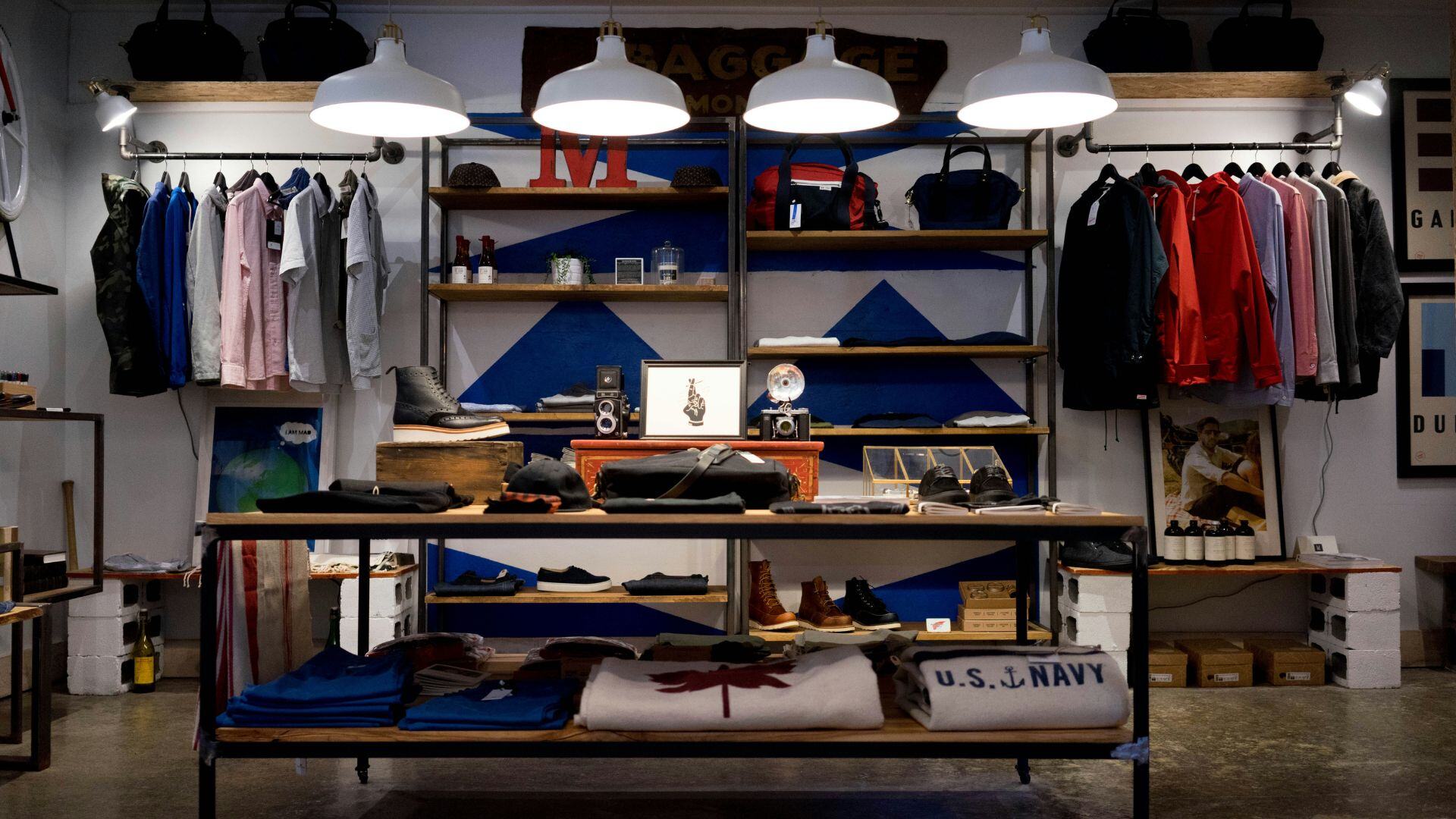
Retail is the sale of products directly to end consumers, one transaction at a time. A retailer buys goods from a wholesaler, manufacturer, or distributor and sells them individually, in a physical store, through a branded website, or across both.
In a retail business model, the brand or store owner controls the entire customer experience, merchandising, pricing, marketing, customer service, and returns. This direct-to-consumer relationship creates opportunities for higher per-unit margins and real-time feedback on what customers actually want.
Key characteristics of the retail business model include the following.
- Single-unit or small-quantity sales. Retail transactions are typically one or a handful of items per order.
- Higher per-unit margin. Because there is no intermediary taking a cut, retailers, or brands selling DTC, capture more revenue per item sold.
- Direct consumer data. Every transaction generates customer data, purchase history, browsing behavior, return rates, that informs product and marketing decisions.
- Higher operating costs. Retail requires significant ongoing investment in marketing, customer acquisition, customer service, and, for physical retail, rent and staffing.
- B2C ecommerce. For digitally native brands, direct-to-consumer ecommerce is the retail channel, a branded Shopify or custom-built storefront where consumers discover, browse, and buy.
Understanding what retail is sets the stage for a meaningful side-by-side comparison, because the two models are not opposites, and many successful brands operate both simultaneously.
Wholesale vs Retail, Key Differences at a Glance
The table below summarizes the structural differences between wholesale and retail across the dimensions that matter most to growing brands.
| Dimension | Wholesale | Retail / DTC |
|---|---|---|
| Buyer type | Businesses (retailers, boutiques, chains) | Individual end consumers |
| Price per unit | Lower (wholesale price) | Higher (retail or MSRP) |
| Order volume | Large (governed by MOQs) | Small (1 to 5 units typical) |
| Gross margin for the brand | Roughly 50% on a 2x cost multiplier, before operating expenses | Roughly 75% at full retail price, before marketing and fulfillment |
| Relationship type | B2B, long-term account relationships | B2C, high volume, lower individual lifetime value |
| Fulfillment | Bulk shipments, pallets or cases, net payment terms | Individual parcel shipping, immediate payment |
| Customer acquisition | Sales reps, trade shows, wholesale marketplaces | Digital advertising, SEO, social media |
| Brand control | Shared, the retailer controls in-store presentation | Full, the brand owns the experience end to end |
| Payment terms | Net 30 or Net 60 invoicing common | Immediate at checkout |
| Seasonal cycle | Spring/summer and fall/winter buying seasons | Year-round, trend-driven restocking |
The difference between wholesale and retail is not simply about who buys, it is about the entire operating model, from how orders are placed to how cash flows through the business.
Wholesale vs Retail Pricing and Margin Structures
Pricing is where the wholesale vs retail distinction becomes most consequential for brand profitability.
Wholesale pricing is typically calculated as a multiplier on the brand's cost of goods. The most common framework is a keystone multiplier. If a product costs $20 to manufacture, the wholesale price is set at $40 to $50, a 2x to 2.5x cost multiplier. The retailer then applies their own markup to arrive at the consumer-facing retail price, often $80 to $100 in this example, a 2x keystone on the wholesale price.
The resulting margin structure looks like this.
- Brand's wholesale margin. The difference between the $20 cost and the $40 wholesale price is $20 gross profit, or a 50% gross margin at the brand level, before operating expenses.
- Retailer's gross margin. The difference between the $40 wholesale cost and the $80 retail price is $40 gross profit, or a 50% gross margin at the retail level.
- Brand's DTC margin if selling direct at $80. That is $60 gross profit on $80 revenue, or a 75% gross margin before marketing and fulfillment costs.
Wholesale minimum order quantities (MOQs) are a lever that brands use to protect their margins. By requiring retailers to order a minimum number of units per style or category, brands ensure that each wholesale transaction generates enough gross profit to justify the production, warehousing, and fulfillment costs involved.
For wholesale pricing strategy, most brands set wholesale minimums by style, for example a minimum of 6 units per colorway, or by order total, for example a $500 minimum opening order. Seasonal order requirements, reorder minimums, and volume-tiered pricing are all common tools for offering competitive prices while protecting the wholesale relationship over time.
Understanding wholesale vs retail profit margins helps brands make informed decisions about which channel to prioritize, or how to balance both without one cannibalizing the other.
How Wholesale Ordering Works, From Brand to Retailer
The wholesale ordering process is structurally different from a consumer purchase. It involves multiple steps, business-to-business communication, and formalized documents that govern what is ordered, when it ships, and how it is paid for.
Here is how a typical wholesale order cycle works for an apparel or lifestyle brand.
- Line sheet or digital catalog presentation. The brand presents its seasonal collection to retail buyers, either at a trade show, in a showroom, or through a digital catalog. The line sheet details every available SKU, colorway, sizing, MOQ, wholesale price, and MSRP.
- Buyer review and selection. The retail buyer reviews the collection, selects the styles and quantities they want, and creates a purchase order.
- Order entry. The order is entered into the brand's order management system, either manually by a sales rep or directly by the retailer through a digital ordering platform or retailer portal.
- Credit and terms verification. The brand's operations team reviews the retailer's credit status and confirms payment terms, such as Net 30, prepaid, or credit card on file.
- Production or fulfillment. Depending on the brand's model, the order triggers production for made-to-order brands, or is pulled from existing warehouse inventory.
- Shipping and invoicing. The order ships and an invoice is issued. The retailer pays within the agreed terms.
- Reorder. Successful sell-through at retail prompts the buyer to place reorders, often mid-season, which are typically smaller, faster, and require immediate availability.
Digital ordering platforms have transformed this process. Instead of paper line sheets, faxed purchase orders, and manual data entry, brands on platforms like RepSpark can give their retail buyers access to a branded digital ordering portal where buyers browse the collection, configure orders, and submit purchase orders directly, at any hour, from any device, including on the trade show floor.
Learn more about how a retailer portal streamlines the B2B ordering relationship.
Selling Wholesale and Retail Simultaneously, The Omnichannel Brand Strategy
One of the most common strategic questions for growing brands is whether to sell wholesale, retail, or both. The answer, for most brands with meaningful scale ambitions, is both, but with clear guardrails.
The case for wholesale. Wholesale gets your product in front of consumers through retail partners who already have foot traffic, an established customer base, and category authority. A boutique surf shop, a specialty golf retailer, or a regional outdoor chain has customers who trust that store's curation. Being stocked there is an endorsement, and every new account expands your lead and customer base without adding storefronts of your own.
The case for DTC retail. Selling directly to consumers gives you full margin capture, direct customer data, and complete brand control. You set the pricing, control the presentation, and own the relationship.
The omnichannel wholesale strategy. The most sophisticated brands run both, using wholesale to drive broad market distribution and brand awareness while using their DTC channel to capture higher-margin sales from their most loyal customers. The key is protecting retail pricing. Brands should enforce Minimum Advertised Price (MAP) policies so that wholesale partners do not undercut the DTC channel, and vice versa.
The DTC vs wholesale tradeoff is not always a zero-sum decision. A brand selling through 200 specialty retail accounts while running a branded B2B ecommerce storefront is not splitting its business, it is expanding its total addressable market. Understanding the benefits of B2B ecommerce is essential for brands exploring this omnichannel approach.
How Digital Tools Are Modernizing Wholesale Buying
For most of wholesale's history, the process was paper-heavy, labor-intensive, and dependent on in-person touchpoints. Sales reps carried physical sample bags to trade shows. Buyers filled out handwritten order forms. Line sheets were printed and mailed. Order entry was done manually, often with errors.
That model has fundamentally changed. Digital tools now power every stage of the wholesale buying cycle, and the brands that have adopted them report significant gains in order accuracy, buyer engagement, and operational efficiency. Reading market trends and applying the help of AI to your B2B sales strategy are now part of how competitive wholesale teams plan a season.
Digital catalogs allow brands to present their full seasonal collection in an interactive, always-current format. A digital catalog replaces static PDFs with a living product presentation. Buyers can filter by category, view multiple colorways, see inventory availability in real time, and move directly from browsing to ordering. Brands update their catalog once, and every retail buyer sees the change instantly.
Retailer portals give wholesale buyers a self-service ordering experience that mirrors what they experience as consumers on DTC sites. Buyers log in, see their account-specific pricing, browse the collection, build an order, and submit, without a sales rep needing to be in the loop for routine reorders. This frees reps to focus on customer relationships and new account development rather than order entry.
Trade show and showroom digital ordering is one of the most impactful applications of wholesale technology. Instead of paper order forms at a trade show booth, brands using RepSpark can take live orders on a tablet or laptop, immediately capturing buyer selections and syncing them to the order management system. This eliminates the post-show data entry backlog that plagued brands for decades.
ERP and inventory integrations ensure that digital ordering platforms stay synchronized with the brand's back-end systems. When a retailer submits an order, inventory is reserved, availability updates in real time, and fulfillment can begin without manual intervention.
For wholesale brands in apparel, footwear, outdoor, and lifestyle categories, these tools are no longer a competitive advantage, they are table stakes. Retail buyers expect a modern, frictionless ordering experience, and brands that cannot provide it lose accounts to competitors who can.
Choosing the Right Model and the Right Tools
Wholesale and retail are not competing philosophies, they are complementary channels that serve different roles in a brand's go-to-market strategy. Wholesale drives distribution, brand placement, and volume. Retail, or DTC, drives margin, consumer data, and brand control. The most successful brands understand both models well enough to run them in parallel without one undermining the other.
What separates the brands that scale successfully through wholesale from those that stall is operational infrastructure. Managing a growing network of retail accounts requires more than a spreadsheet and a sales rep with a sample bag. It requires digital ordering tools, real-time inventory visibility, streamlined invoicing, and a buying experience that retail partners actually enjoy using.
RepSpark is built specifically for wholesale brands in lifestyle, apparel, footwear, outdoor, and adjacent categories. The platform connects more than 225 brands with over 100,000 specialty retailers through a branded ordering experience, digital catalogs, retailer portals, trade show ordering, and B2B account management, all integrated with the ERPs and systems brands already use. RepSpark has been named to the Inc. 5000 list for four consecutive years and maintains SOC 2 Type II and GDPR compliance.
Wholesale vs Retail: Frequently Asked Questions (FAQs)
What is the main difference between wholesale and retail?
Wholesale is selling products in bulk to another business that will resell them. Retail is selling products individually to the person who will actually use them. The difference shows up everywhere else in the operating model, in order size, pricing, payment terms, and who controls the customer relationship. A wholesale order might be 200 units on Net 30 terms. A retail order is one unit paid at checkout.
Is wholesale or retail more profitable for a brand?
Retail carries the higher margin per unit, wholesale carries the higher volume per order. A brand selling direct at full retail price keeps roughly 75% gross margin before marketing and fulfillment, while the same product sold wholesale returns roughly 50% gross margin at a 2x cost multiplier. The catch is that DTC margin funds its own customer acquisition, and that cost is real. Wholesale buys distribution and shelf presence that would take years and significant capital to build on your own.
Can a brand sell wholesale and DTC at the same time?
Yes, and most brands at scale do. The two channels reach different buyers in different moments, so running both expands your total addressable market rather than splitting it. The requirement is pricing discipline. Publish a Minimum Advertised Price policy, enforce it consistently across accounts, and avoid running DTC promotions that undercut the partners carrying your product. Channel conflict is a policy failure, not an inevitable outcome.
How is wholesale price calculated?
Most brands start from cost of goods and apply a multiplier. A product that costs $20 to make is typically priced at $40 to $50 wholesale, a 2x to 2.5x multiplier. The retailer then applies their own keystone markup, usually 2x, to reach a retail price of $80 to $100. That structure leaves roughly 50% gross margin for the brand and 50% for the retailer. Brands with higher fulfillment or design costs often push toward the 2.5x end to protect margin.
What is a minimum order quantity in wholesale?
A minimum order quantity, or MOQ, is the smallest amount a retailer must buy for an order to be accepted. It can be set by style, for example 6 units per colorway, or by total order value, for example a $500 opening order. MOQs exist so that each transaction generates enough gross profit to cover production, warehousing, picking, and shipping. Set them too high and you lose small specialty accounts. Set them too low and you lose money on every order.
What is the difference between a wholesaler and a distributor?
A wholesaler generally buys from brands and sells to retailers, taking on inventory but little responsibility for the brand itself. A distributor typically holds a broader agreement, often exclusive to a territory or category, and takes on more of the selling, marketing, and support work on the brand's behalf. Brands selling through distributors give up more margin and more control, and in exchange get market access they could not reach directly, which is common in international expansion.
Do I need a license to sell wholesale?
In the United States, most states require a seller's permit or resale certificate to buy and sell goods for resale without paying sales tax at each step. Requirements vary by state, and some categories carry additional licensing. Confirm what applies to you with your state's revenue department and a tax professional before opening wholesale accounts. This is not legal or tax advice, it is the general framework most brands operate under.
What is a line sheet, and how is it different from a digital catalog?
A line sheet is the document a buyer uses to make purchasing decisions. It lists every style, colorway, size run, wholesale price, MSRP, MOQ, and delivery window in one place. A digital catalog does the same job in a living format. Buyers filter by category, see current inventory availability, view multiple colorways, and move straight from browsing into an order. The line sheet informs. The digital catalog informs and then captures the order.
How do wholesale payment terms work?
Net 30 and Net 60 are the most common wholesale terms, meaning the retailer pays the full invoice within 30 or 60 days of shipment. New accounts often start on prepayment or credit card until they establish history. Terms are a genuine cost to the brand, since inventory is produced, shipped, and financed before the cash arrives. Many brands run credit checks on new accounts and set per-account credit limits to manage that exposure.
If you're ready to modernize your wholesale channel and give your retail partners the ordering experience they expect, see how RepSpark works, and what it could mean for your brand's growth.